Strategy 7 min read
SEO·AEO·GEO vs HubSpot AI Search Grader vs SEOmator GEO Audit: What Each One Actually Checks
All three are free and all three return a score out of 100, so they look interchangeable. They aren't. One asks AI models what they think of your brand, one grades your pages against a broad GEO rubric, and one tests whether AI search crawlers can actually get in. Here is the difference, from each vendor's own page, and who should pick which.

Founder, SEO·AEO·GEO
Builds SEO·AEO·GEO and writes the crawler, schema, and citation research published here.
Key takeaways
- HubSpot's AI Search Grader doesn't look at your website: it asks GPT-5.4 mini, Perplexity and Gemini how they characterise your brand, and scores sentiment, presence and share of voice.
- SEOmator's GEO Audit grades up to 50 pages on six weighted categories, including schema (10%), and checks robots.txt against 14 AI crawlers.
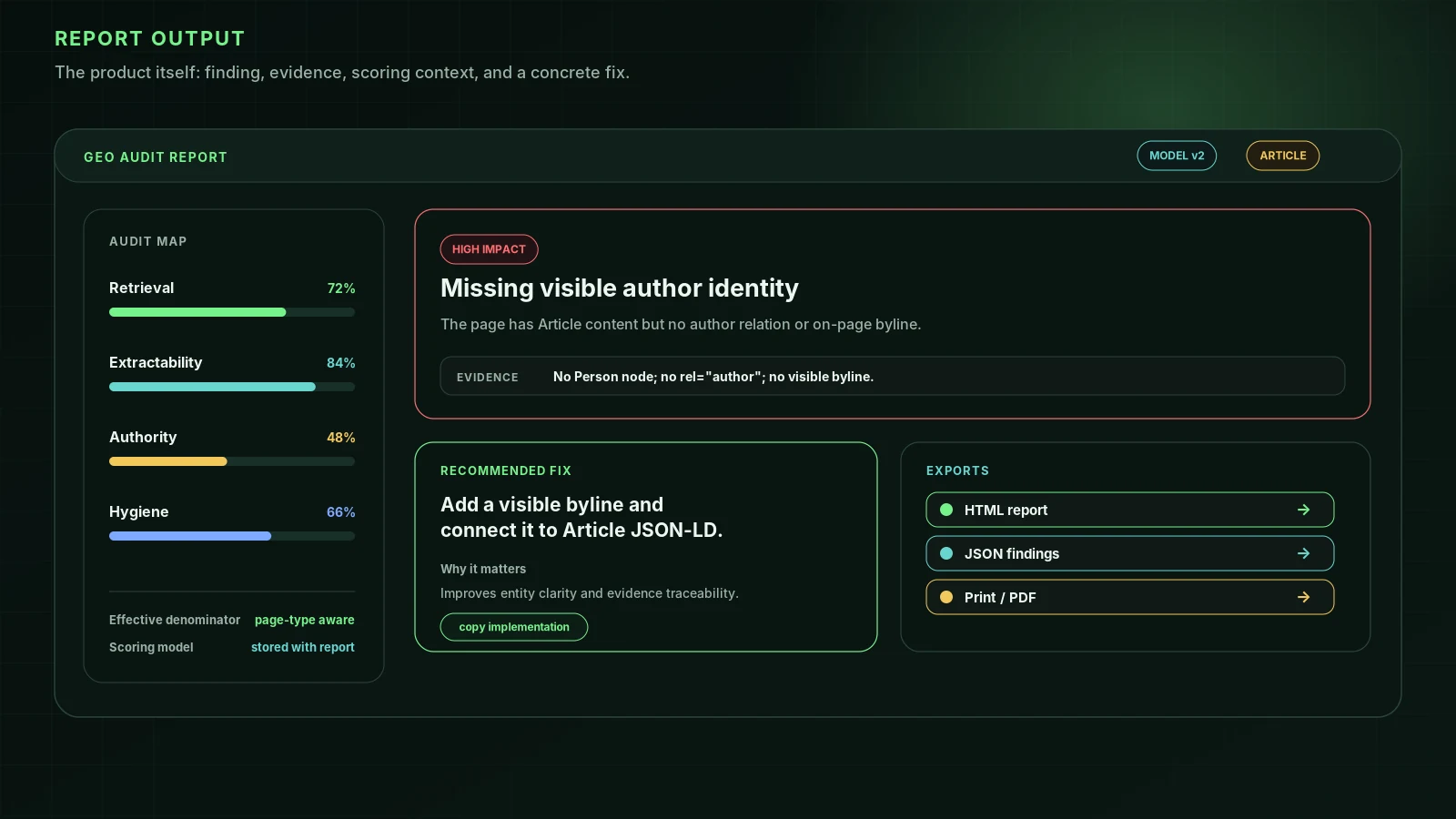
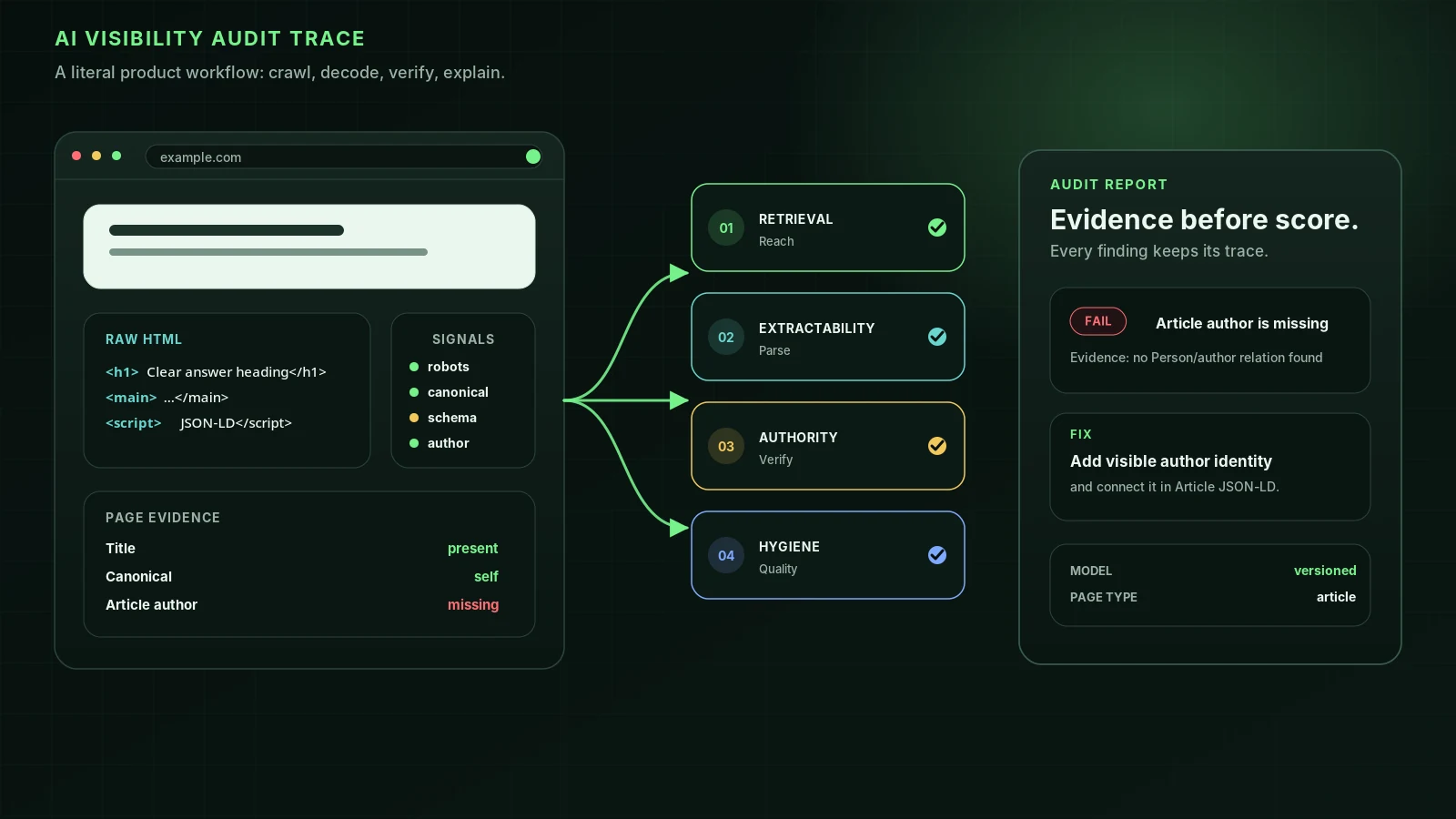
- SEO·AEO·GEO sends live requests with OAI-SearchBot, PerplexityBot and Claude-SearchBot user agents, reads robots.txt for 31 AI crawlers, and gives llms.txt and FAQ schema zero points.
- Use HubSpot's grader to learn what models already say about you, SEOmator for a broad page-quality sweep, and ours to find out whether a firewall or robots.txt rule is keeping AI search out.
- This comparison is from each vendor's public page on 21 October 2026; we have not yet run their tools on the same sites side by side.
HubSpot's AI Search Grader, SEOmator's GEO Audit and SEO·AEO·GEO are all free and all end in a score out of 100, but they measure different things. HubSpot's grader asks three AI models what they think of your brand and never looks at your site. SEOmator grades up to 50 of your pages against a broad rubric that includes E-E-A-T, schema and brand presence. SEO·AEO·GEO tests whether AI search crawlers can reach and read a page, including firewall blocks that robots.txt doesn't show. Pick by the question you need answered.
At a glance
| HubSpot AI Search Grader | SEOmator GEO Audit | SEO·AEO·GEO | |
|---|---|---|---|
| The question it answers | What do AI models say about my brand? | How do my pages grade on a broad GEO rubric? | Can AI search crawlers reach, read and quote this page? |
| What you enter | Company name, location, product or service, industry; a short form to unlock the full results | A URL | A URL |
| Looks at your site? | No; the page describes asking models about the brand from their training data | Yes, up to 50 pages, raw HTML without JavaScript | Yes, one page in full plus a sitewide overview of up to 10 pages, raw HTML without JavaScript |
| AI crawler check | None described | robots.txt against 14 AI crawlers in 3 tiers; the page doesn't describe live requests | robots.txt for 31 AI crawlers, plus live requests with OAI-SearchBot, PerplexityBot and Claude-SearchBot user agents |
| How the score is built | Sentiment 40, presence quality 20, brand recognition 20, share of voice 10, market competition 10 | Content E-E-A-T 22%, technical SEO 20%, AI citability 18%, brand authority 18%, platform readiness 12%, schema 10% | Crawler access and readable content weigh most; llms.txt and FAQ schema are reported but score zero (methodology) |
| Account needed? | No account for the check; a form for the full report | No signup or email; a free account for re-audits and alerts | No account for the full audit |
| Paid next step | HubSpot AEO, $50/month, prompt tracking | Usage-based pricing for SEOmator's wider product | ₹499 one-time report for one site, or Pro at ₹1,499/month with weekly alerts (pricing) |
HubSpot AI Search Grader: a brand-perception snapshot
HubSpot's grader is the only one of the three that tells you what models already believe about you. Per its page, it sends your brand details to GPT-5.4 mini, Perplexity and Gemini, asks each how it characterises the brand, and scores the answers on five dimensions, with sentiment worth 40 of the 100 points. HubSpot calls it a free, one-time snapshot and notes the results are AI-generated and not human-reviewed. You can enter any brand, including a competitor's.
What it can't tell you is why. A model's view of your brand comes from what it learned in training and what other sites say about you, and the grader doesn't fetch your pages, so it can't show that a robots.txt rule or a Cloudflare setting is keeping ChatGPT search out. A low score tells you there's a problem, not where it is.
SEOmator GEO Audit: the broad page-quality sweep
SEOmator's audit is the widest of the three. Its page lists six weighted categories, from content E-E-A-T and technical SEO to brand authority (presence on YouTube, Reddit, Wikipedia, LinkedIn and GitHub) and schema. It scores passages for citability, checks robots.txt against 14 AI crawlers in three tiers, validates llms.txt, and generates JSON-LD for missing schema types. It covers up to 50 pages without a signup, which is generous.
Two choices differ from ours. First, schema markup is 10% of the score; Google's own guide says structured data isn't required for generative AI search and there's no special markup to add (Google), so we report schema but don't award points for it. Second, the page describes the crawler check as a robots.txt check and doesn't say it sends requests as those crawlers, so a firewall that refuses GPTBot or OAI-SearchBot while robots.txt allows them may not show up. SEOmator is candid about its own limits: it says the crawler reads raw HTML without running JavaScript and that Core Web Vitals are estimated from HTML, not measured.
SEO·AEO·GEO: does AI search get in?
Ours is the narrowest of the three, on purpose. It answers whether the AI search crawlers can fetch your page and what they get when they do. It reads your robots.txt for 31 AI crawlers, separating training bots (blocking them is a legitimate choice) from the search bots that decide whether you appear in ChatGPT search, Claude and Perplexity. Then it requests the page with the OAI-SearchBot, PerplexityBot and Claude-SearchBot user agents and compares what comes back with what a browser gets, which is how it catches a challenge page or a 403 that robots.txt would never reveal. One limit to know: those requests come from our servers, not from the vendors' IP ranges, so a firewall that allowlists vendor IPs can treat them differently from the real crawlers.
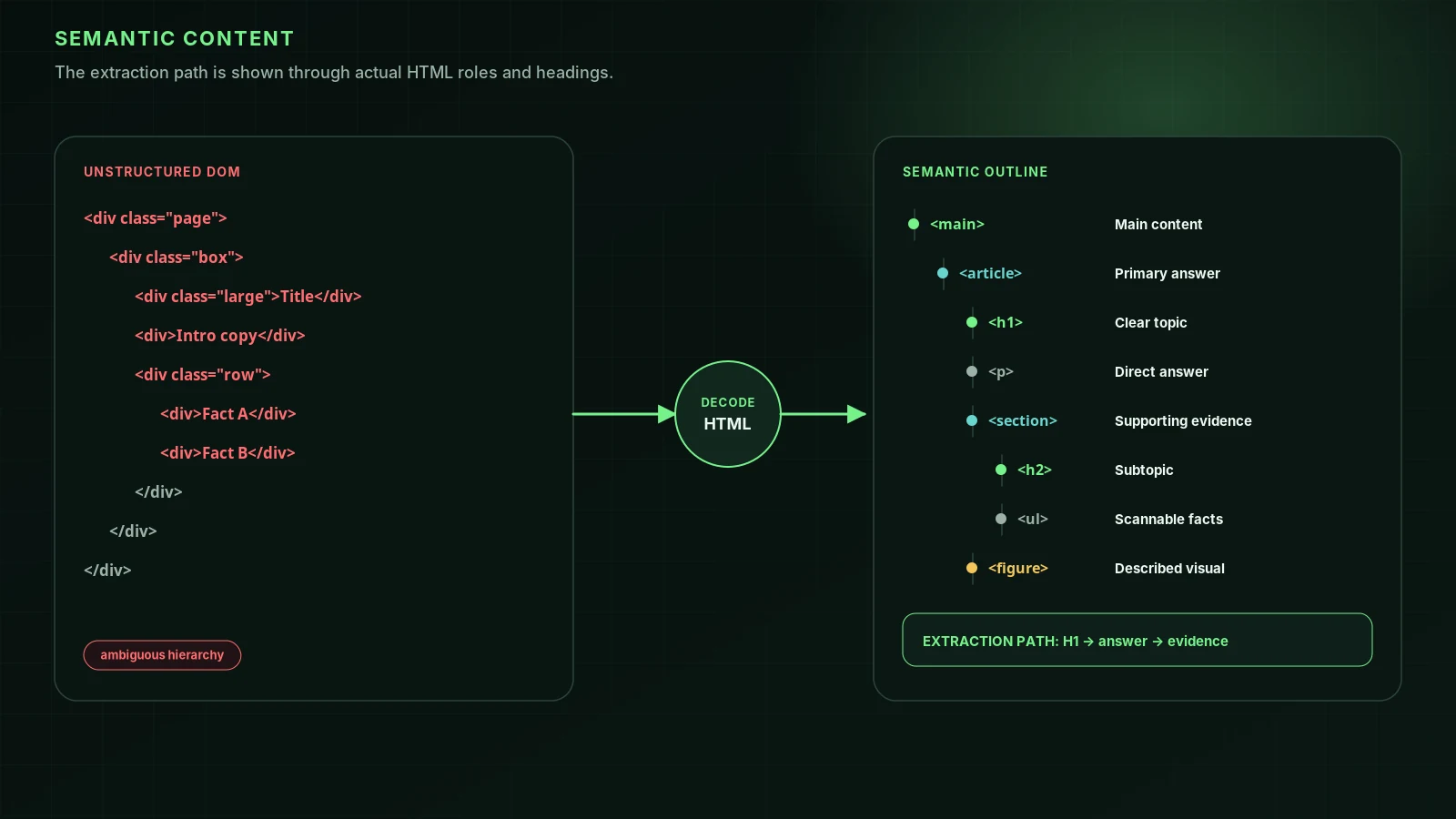
It also flags pages whose HTML is near-empty without JavaScript, because GPTBot, ClaudeBot and PerplexityBot don't run it. It gives llms.txt and FAQ schema zero points; the methodology page explains why. It doesn't measure brand sentiment or brand footprint on other sites, and it isn't a prompt tracker.
If you use all three, use them in this order
- Check access first. A page a search crawler can't fetch can't be cited, so rule that out before anything else: our audit or the free AI crawler checker, then fix robots.txt with the AI robots.txt generator if a search bot is blocked.
- Then grade the content. A broad sweep like SEOmator's will list content and structure work across many pages.
- Then watch perception. HubSpot's grader shows what models say about you now; run it again after a few months of changes, and remember that answers vary from run to run.
- Measure what actually happens with first-party data: Google's AI features in Search Console, and how to measure AI visibility for the rest.
For the general version of this comparison, with eight checks you can apply to any GEO tool, ours included, see how to choose a GEO audit tool. To see how often large sites block AI crawlers, browse the AI visibility index.
FAQ
Does HubSpot's AI Search Grader audit my website?+
Not according to its own page. It takes a company name, location, product or service and industry, then asks GPT-5.4 mini, Perplexity and Gemini how they characterise the brand based on their training data. There is no URL field, and the page doesn't mention crawling or robots.txt.
Is SEOmator's GEO Audit free?+
Yes. SEOmator's page says the audit needs no signup or email and has no daily quota. A full audit covers up to 50 pages; scheduled re-audits, alerts and larger crawls need a free SEOmator account.
Which of the three tells me if ChatGPT can crawl my site?+
SEOmator and SEO·AEO·GEO both read your robots.txt rules for AI crawlers. SEO·AEO·GEO also requests the page with the OAI-SearchBot, PerplexityBot and Claude-SearchBot user agents, which catches firewalls and CDN rules that refuse crawlers robots.txt allows. HubSpot's grader doesn't check crawler access.
Why do these tools give the same site different scores?+
Because they score different things. HubSpot weights sentiment at 40 of 100 points, SEOmator gives schema markup 10% and content E-E-A-T 22%, and we weight crawler access and readable content most. A high score on one says little about the others.
Can I use more than one?+
Yes, and since all three are free to run once, it's reasonable to. They answer different questions: what models say about you, how your pages grade on a broad rubric, and whether AI search crawlers can get in.
Sources
- AI Search Grader — HubSpot (2026-10-21)
- HubSpot AEO — HubSpot (2026-10-16)
- Free GEO Audit Tool — SEOmator (2026-10-21)
- Overview of OpenAI Crawlers — OpenAI
- Google's guide to optimizing for generative AI features on Google Search — Google Search Central (2026-07-10)
Run it on your domain
See this lens as a finding, not a lecture.
Free technical GEO audit. Evidence-traced scores, LLM-ready export, no login.
Audit your website