Strategy 11 min read
Why ChatGPT Recommends Your Competitor, Not You: How to Find Out
It usually isn’t your website. It’s the handful of lists, directories and review pages ChatGPT read before it answered, and those pages can be found, checked and worked on.

Founder, SEO·AEO·GEO
Builds SEO·AEO·GEO and writes the crawler, schema, and citation research published here.
Key takeaways
- ChatGPT usually names the businesses that the pages it retrieved name, so a competitor wins when it appears on lists, directories and review sites you’re missing from.
- You can see those pages: ask the buyer’s question in a temporary chat, open the Sources panel, and repeat on several days.
- Google rankings and reviews don’t transfer automatically; one study found ChatGPT recommended 1.2% of business locations, against 35.9% appearing in Google’s local 3-pack.
- On 13 October 2026 most directories we checked let AI search crawlers in, but Yelp closed its business pages to all of them.
- Fix what you control first, then work the specific third-party pages, and measure across many runs because nobody can guarantee the outcome.
Usually because ChatGPT found your competitor on the pages it read, and didn’t find you there. When ChatGPT searches, it pulls a handful of pages, most often “best X in [city]” lists, directories, review sites and comparison articles, and it names the businesses those pages name. Your Google ranking and your star rating matter less than whether those specific pages mention you.
The pages aren’t secret. ChatGPT shows its sources. Ask the question your customers ask, open the Sources panel, repeat it on a few days, and you have the list of pages that decide who gets recommended in your market. This guide shows how to collect that list, the six usual reasons a competitor wins, and what to do about each. One caveat up front: nobody, including us, can guarantee that ChatGPT will name you, and its answers change from run to run.
Why ranking on Google isn’t enough
Many owners who ask this rank on page one and have hundreds of reviews. That work does carry over to Google’s own AI features, which Google says are “rooted in our core Search ranking and quality systems”. ChatGPT is a different pipeline. It runs its own search (OpenAI’s crawler is OAI-SearchBot), uses third-party search providers it doesn’t name, and builds its answer from the few pages it retrieves. For the mechanics, see how ChatGPT chooses its sources.
The assistants rarely agree with each other either. In a July 2026 study of 3,200 legal prompts by CLM Sequoia, a legal-marketing firm, the law firms named by ChatGPT and Claude overlapped only 8.6% of the time on average, yet their directory citations overlapped 37.5%. Assistants agree more on where to look than on whom to pick. That makes the directories a shared lever.
Step 1: find the pages ChatGPT actually read
This takes about an hour for ten questions. Use a spreadsheet so you can repeat it next month.
- Write down ten to twenty questions real customers ask, with the place and the need: “best family dentist in Bristol for nervous patients”, “HubSpot alternatives for a five-person agency”. Your enquiry emails are the best source of wording.
- Use a temporary chat or a logged-out browser window. OpenAI says ChatGPT search can draw on your Memory when it rewrites a query, so your own account is a biased test.
- Make sure the answer searched the web. A searched answer has small inline citations and a Sources button beneath it. If there are none, it answered from training data; ask it to search the web and note both versions.
- Open Sources and copy every URL listed, including the extra links below the cited ones.
- Record which businesses were named, in what order, and which URLs were cited.
- Repeat each question on at least five different days. The research survey we rely on proposes seven to eight repetitions per prompt as a starting point; one run tells you almost nothing.
| Date | Question | Searched? | Businesses named | Cited URLs | You named? |
|---|---|---|---|---|---|
| Day 1 | best emergency plumber in Leeds | Yes | Competitor A, B, C | a “best plumbers in Leeds” list; a trade directory profile; a review page | No |
| Day 2 | same question | Yes | Competitor A, D | the same list; a local news article | No |
| Day 3 | same question, reworded | No | Competitor A | none (answered from training data) | No |
Step 2: read the cited pages like a detective
Sort your URLs by how often they recur across runs. For each recurring page, answer five questions:
- Does it mention your competitor, and in what words? Models often repeat a page’s one-line description almost word for word.
- Does it mention you? If so, are your name, category, location and services correct?
- Who controls it: a directory you can join, a list a journalist or blogger maintains, a review platform, or your competitor’s own site?
- Is it current? An old list with stale entries is an opening, because lists get updated.
- Can AI search crawlers reach it? If the site blocks them, ChatGPT is getting that data some other way or not at all (see our check below).
The six usual reasons, and what to do about each
| Reason | How you’ll recognise it | What to do | Evidence |
|---|---|---|---|
| They’re on the “best X” lists and you aren’t | The same list articles recur in Sources and name them | Contact the authors with a short, checkable case; correct wrong details | Moderate: Ahrefs, 750 prompts |
| They have complete directory profiles | Trade, legal, medical or software directory pages recur | Claim and complete the same profiles with identical details | Moderate: CLM Sequoia legal study |
| Their reviews live on more platforms | Cited pages quote ratings from sites where you have few reviews | Ask customers to review you on the platforms that appear in Sources | Moderate: SE Ranking, SOCi |
| ChatGPT is unsure who you are | Wrong city or service, or a similarly named business | Make name, address, phone and description identical everywhere | Untested as a citation factor; fixes a visible error |
| It can’t reach or read your site | Your pages never appear in Sources, even for your brand name | Allow OAI-SearchBot in robots.txt and your firewall; serve text in HTML | Platform docs (OpenAI); Strong (no JavaScript) |
| They publish comparison content and you don’t | Their “X vs Y” or “alternatives” pages appear in Sources | Write fair comparisons; never rank yourself first in your own list | Mixed: studies conflict |
1. Lists you’re missing from
Ahrefs found “best X” blog lists made up 43.8% of the page types ChatGPT cited for recommendation prompts (750 prompts, December 2025, vendor study). It is the most common reason a competitor wins and the most fixable, because lists are written by people who can be emailed. Lead with facts the author can verify: what you do, where, for whom, since when, plus a link to independent proof such as reviews or press coverage. Don’t pay for unlabelled placements. Google’s own guide warns that “seeking inauthentic ‘mentions’ across the web isn't as helpful as it might seem”.
2. Directories that matter in your field
Each assistant leans on its own set. In CLM Sequoia’s legal study, Claude cited Avvo in 87.1% of prompts and Martindale in 55.5%; Google AI Mode cited Super Lawyers in 62.8% and Justia in 60.2%; ChatGPT cited Avvo in 29.2% and Justia in 20.5%. Your field has its own equivalents: software review sites for SaaS, trade directories for home services, booking and review platforms for restaurants. Your Step 1 Sources list tells you which matter where you work.
3. Reviews on other platforms
Reviews behave more like a filter than a ranking. SOCi found the locations ChatGPT recommended averaged 4.3 stars (January 2026, vendor study). SE Ranking found domains listed on several review platforms averaged 4.6–6.3 ChatGPT citations, against 1.8 for domains listed on none (correlational). If your 500 Google reviews never surface in Sources, they may simply not be on the pages ChatGPT reads. Yelp is a special case, covered below.
4. ChatGPT is unsure who you are
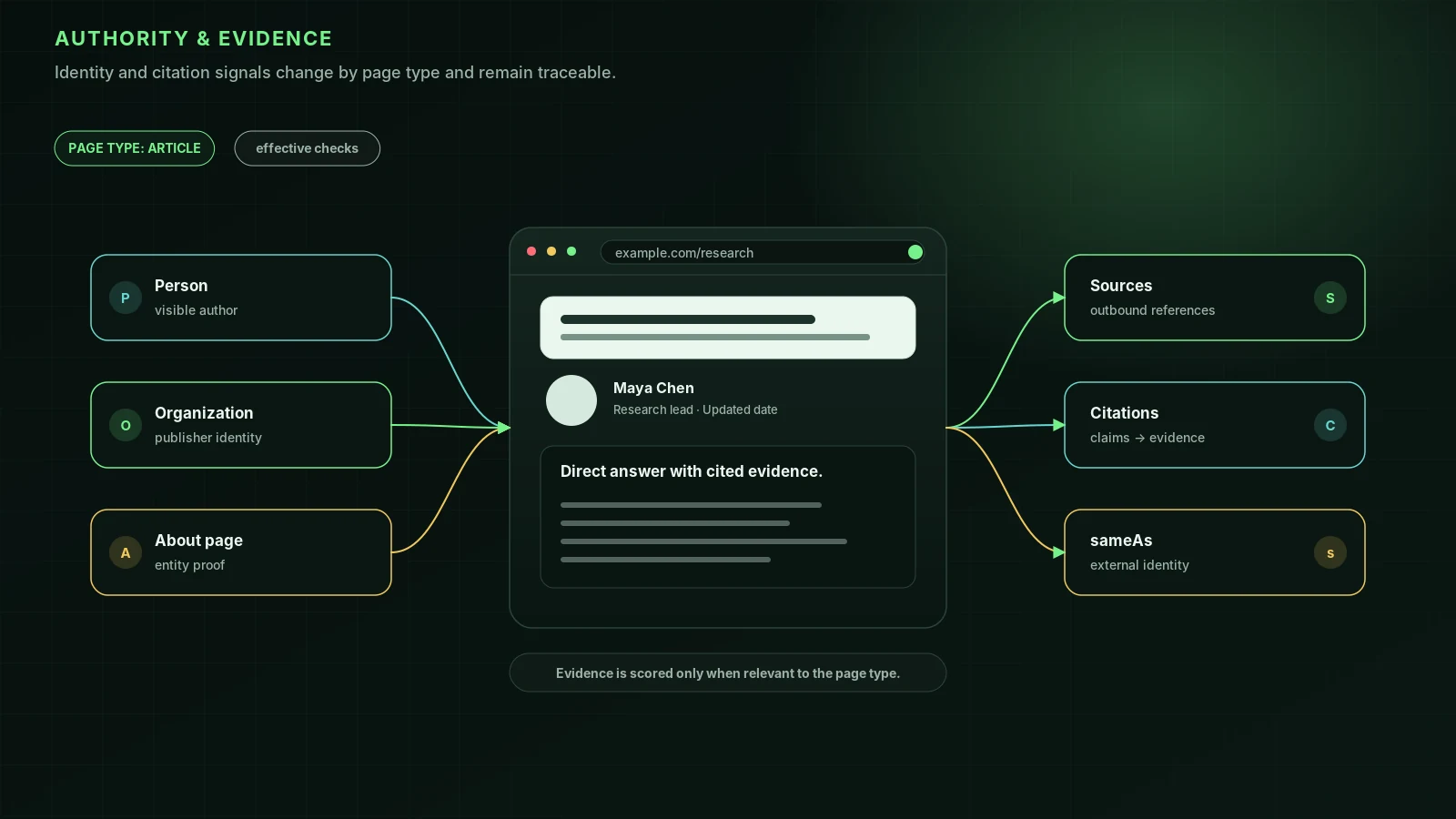
If ChatGPT gives your business the wrong city, merges you with a similarly named company or lists one firm several times, the model can’t tell the entities apart. Make your name, address, phone number and one-sentence description identical on your website, Google Business Profile, Bing Places, Apple Business Connect and every directory. Put the facts people ask about on your own site in plain text. Structured data and sameAs links help machines connect your profiles, which is why authorship and sameAs are worth doing, but no study shows them raising citations by themselves.
5. ChatGPT can’t reach or read your site
If your own pages never appear in Sources, even when someone asks about you by name, check access first. OpenAI says sites opted out of OAI-SearchBot “will not be shown in ChatGPT search answers”. A firewall can block it even when robots.txt allows it. Since 15 September 2026, Cloudflare’s “Block” option for AI training also stops Googlebot, Bingbot and Applebot, while “Disallow AI Training” keeps them crawling for search; our Cloudflare guide explains the difference. And if your text only appears after JavaScript runs, AI crawlers may see an almost empty page. Our free AI crawler checker tests robots.txt and the edge response together; the manual tests are in can ChatGPT read your website.
6. Comparison content, done honestly
Here the evidence conflicts. Ahrefs found self-promotional “best” lists in more than a third of ChatGPT’s software answers when the publisher was recommended, and concluded “there appears to be no downside from a traditional ranking or AI citation perspective” (December 2025). Lily Ray, using Ahrefs Brand Radar data on 100 B2B software queries, found that when a brand’s own self-promotional listicle was cited in Google’s AI Overviews, “that brand was left out of the actual recommendation 69% of the time” (June 2026). Our reading: being cited and being recommended are different outcomes. Fair comparison pages that say who each option suits give the model accurate facts and help buyers; a list that ranks you first may end up getting your competitors named.
What we saw when we checked the sites AI assistants cite
On 13 October 2026 we downloaded the robots.txt files of directories and review sites that studies and our audience research show AI assistants citing. We evaluated each against a typical profile-page URL the way RFC 9309 describes: the group naming the crawler applies, otherwise the * group, and the longest matching rule wins. This shows what each site asks crawlers to do. It doesn’t show what their firewalls do, and it says nothing about licensing deals.
| Site (page tested) | OAI-SearchBot (ChatGPT) | PerplexityBot | Claude-SearchBot | Googlebot and Bingbot |
|---|---|---|---|---|
| Yelp (/biz/ business page) | Disallowed; only /spk/ and /article allowed | Disallowed | Disallowed | Allowed |
| Tripadvisor (restaurant review page) | Allowed | Allowed | Allowed | Allowed |
| G2 and Capterra (product review pages) | Allowed | Allowed | Allowed | Allowed |
| Trustpilot (company review page) | Allowed | Allowed | Allowed | Allowed |
| BBB (business profile) | Allowed | Allowed | Allowed | Allowed |
| Avvo (attorney profile) | Allowed | Allowed | Allowed | Allowed |
| ThreeBestRated and HomeStars (city and company pages) | Allowed | Allowed | Allowed | Allowed |
| LinkedIn (company page) | Allowed | Disallowed | Allowed | Allowed |
| Reddit (any thread) | Disallowed (User-agent: * Disallow: /) | Disallowed | Disallowed | Disallowed in the file we received |
Three things stand out. First, most directories let AI search crawlers in, while several block the training crawler GPTBot (Tripadvisor, Avvo and LinkedIn all do): the same search-yes, training-no split OpenAI’s documentation allows. Second, Yelp is the exception among review sites. Its business pages are closed to every AI search crawler we tested, so your Yelp profile isn’t reaching ChatGPT through OAI-SearchBot. MarTech reported in July 2026 that Yelp licenses reviews, ratings, photos and business details to OpenAI, which is the more likely route, though neither company has published how it works. Third, several legal and medical directories (Justia, Martindale, Super Lawyers, Healthgrades, Zocdoc) refused our plain requests with a 403, so we couldn’t read their files from our test machine. That tells you nothing about how they treat verified crawlers; it is a reminder that a quick check from a laptop isn’t what a real bot sees.
What to do with this: prioritise profiles on sites AI crawlers can read, and keep your Yelp listing accurate anyway, because that data reaches ChatGPT by another route. For platform-by-platform local advice, see how local businesses get recommended by ChatGPT, Google AI and Siri.
What not to do
- Don’t buy reviews or post fake ones. It breaks the rules of Google, Yelp and the other platforms, and it puts the listings you depend on at risk.
- Don’t pay for “ChatGPT submission” or “AI listing” services. OpenAI has no submission route for websites.
- Don’t seed Reddit or forums with fake recommendations. Google says inauthentic mentions aren’t as helpful as they seem, and Reddit’s share of ChatGPT citations fell from 3.83% to 0.52% in August 2026 for reasons nobody has explained (Promptwatch data, provisional).
- Don’t rewrite your site into short Q&A blocks or add llms.txt to fix this. The evidence on both is against them (see GEO myths, graded), and the problem usually sits off your site.
- Don’t judge progress by one screenshot. With brand lists changing on almost every run, one good or bad answer is noise.
How long until ChatGPT changes its answer?
Access fixes are quick: OpenAI says robots.txt changes reach its search systems in about 24 hours, though recrawling your pages can take longer. Off-site work is slower and less predictable. A list author may update next week or never, and ChatGPT has to retrieve the updated page before it can repeat it. Re-run your tracking sheet monthly and look at the share of runs that name you, question by question. Our guide to measuring AI visibility covers which numbers to trust, and the full plan beyond competitor analysis is in how to get ChatGPT to recommend your business.
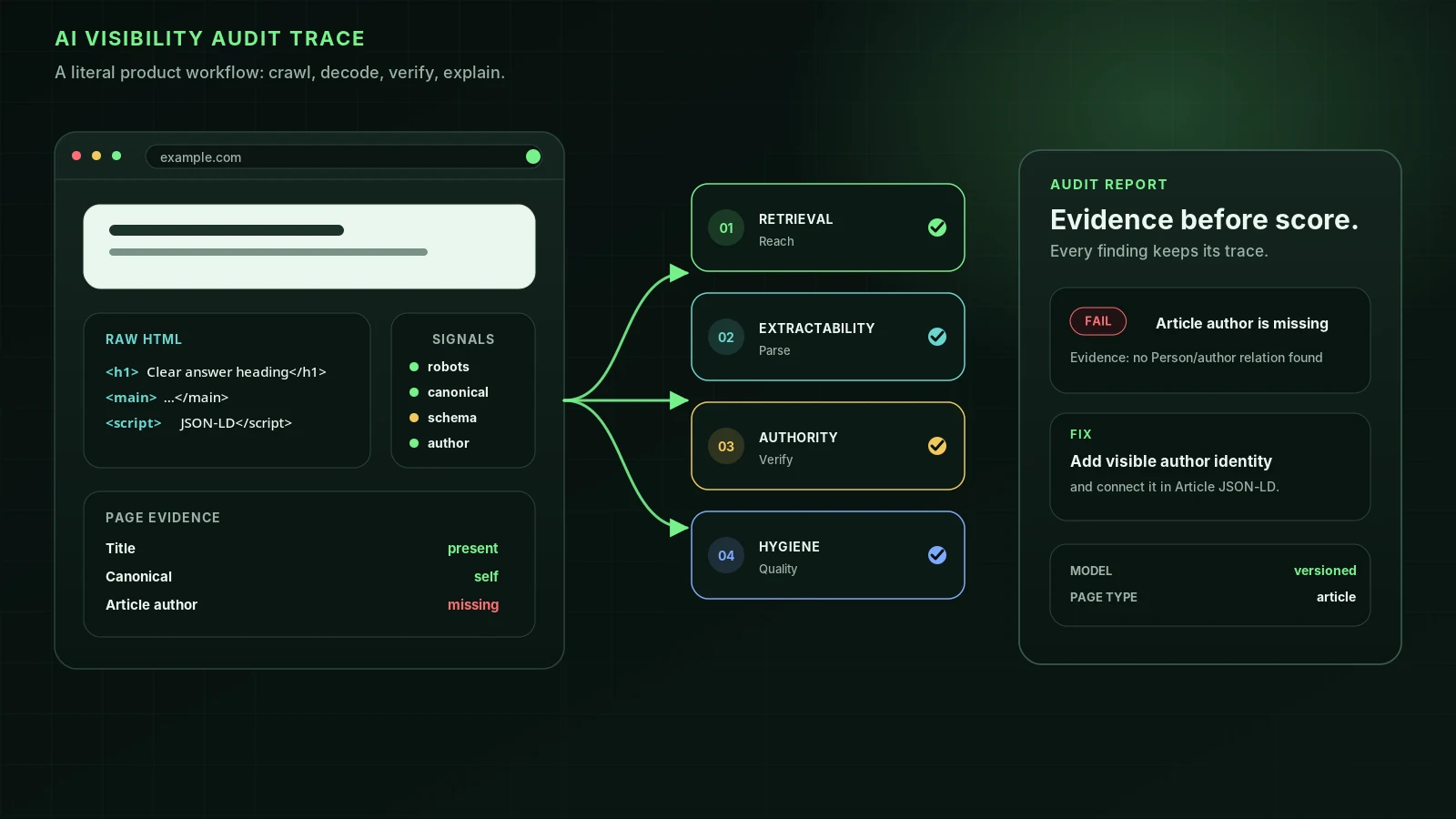
To check the technical half in under a minute, run a free audit. It tells you whether ChatGPT’s, Claude’s and Perplexity’s crawlers can reach and read your pages. It can’t tell you whether a list author will add you; that part is still outreach.
FAQ
Why does ChatGPT recommend my competitor and not me?+
Usually because your competitor appears on the pages ChatGPT retrieved for that question, such as “best X” lists, directories and review sites, and you don’t. ChatGPT tends to name the businesses those pages name. Open the Sources panel on a few repeated answers to see exactly which pages they are.
My competitor has worse reviews. Why does ChatGPT prefer them?+
Reviews work more like a filter than a ranking, and ChatGPT may not be reading the platform where your reviews live. If your competitor is on more of the lists and directories ChatGPT cites, it can win despite a lower rating. Compare where your reviews sit with the sites listed in Sources.
Why am I invisible on ChatGPT when I rank well on Google?+
ChatGPT runs its own search through OAI-SearchBot and third-party providers, then answers from a handful of pages. Google rankings help but don’t transfer automatically. Also check that OAI-SearchBot isn’t blocked by your robots.txt or your firewall, because then your own pages can’t appear at all.
Can I ask ChatGPT why it didn’t recommend me?+
You can, but the reply is generated text, not a record of what it searched. Use the Sources panel and repeated runs instead. For Copilot, Bing Webmaster Tools shows the grounding queries behind the citations of your pages.
Why does ChatGPT give different answers every time?+
Each run can produce different search queries and retrieve different pages, and the model is not deterministic. In a test of nearly 3,000 runs, the brand list changed more than 99% of the time. Track how often you are named across many runs rather than one answer.
Can I pay to be recommended by ChatGPT?+
Not inside the answers. OpenAI offers no paid placement or submission route for websites and states that ads don’t influence ChatGPT’s answers. Be wary of any service that promises a guaranteed placement.
Sources
- Overview of OpenAI Crawlers — OpenAI Developers
- ChatGPT search (Help Center; read via search snippets, the page blocks automated access) — OpenAI
- Our approach to advertising and expanding access (read via search snippets) — OpenAI (2026-01-16)
- Optimizing your website for generative AI features on Google Search — Google Search Central (2026-07-10)
- In AI-driven discovery, few brands are chosen and most disappear (350,000 locations) — vendor study — SOCi (2026-01-28)
- Do self-promotional “best” lists boost ChatGPT visibility? (26,283 source URLs) — vendor study — Ahrefs (2025-12-04)
- Why calling yourself “the best” could cost you AI recommendations (Ahrefs Brand Radar data) — Lily Ray (2026-06-17)
- ChatGPT, Claude and Google AI Mode rarely recommend the same law firms (3,200 prompts) — vendor study — Custom Legal Marketing (CLM Sequoia) (2026-07-29)
- ChatGPT ranking factors (129k domains, correlational) — vendor study — SE Ranking (2025-11-24)
- AI recommendations change with nearly every query (SparkToro and Gumshoe study) — Search Engine Journal (2026-01-30)
- Optimizing Visibility in Generative Engines: A Critical Survey of GEO (2023–2026) — arXiv (Martinez) (2026-07-15)
- Accountable mixed-use AI crawlers (Disallow AI Training vs Block) — Cloudflare Blog (2026-09-15)
- Yelp brings reviews and local leads to ChatGPT — MarTech (2026-07-28)
- Reddit’s ChatGPT citation drop is unexplained (Promptwatch data) — Relevant Audience (2026-08-20)
- Introducing AI Performance in Bing Webmaster Tools (Public Preview) — Microsoft Bing Webmaster Blog (2026-02-10)
- RFC 9309: Robots Exclusion Protocol — IETF (2022-09)
Run it on your domain
See this lens as a finding, not a lecture.
Free technical GEO audit. Evidence-traced scores, LLM-ready export, no login.
Audit your website