Strategy 8 min read
SEO in Digital Marketing: Where Search Fits With Ads, Social, Email and Content
SEO is the part of digital marketing that captures people who are already searching. It's slow to start and cheap to keep. Here's how it fits with the channels that create demand.

Founder, SEO·AEO·GEO
Builds SEO·AEO·GEO and writes the crawler, schema, and citation research published here.
Key takeaways
- In digital marketing, SEO is the channel that earns unpaid visibility in search engines for people who are already looking for what you sell.
- Search captures demand; social, video and display mostly create it. A healthy plan uses one to feed the other.
- Paid search buys the same page positions SEO earns, so the two should share keyword research and landing pages.
- Content is the raw material for both SEO and social. Write each important page once, well, and promote it everywhere.
- AI assistants now answer many searches. The same SEO foundations, plus crawler access for AI bots, decide whether your pages are cited.
In digital marketing, SEO is the channel that earns you unpaid visibility in search engines. It reaches people at the moment they're looking for something, which is why it often brings the most motivated visitors.
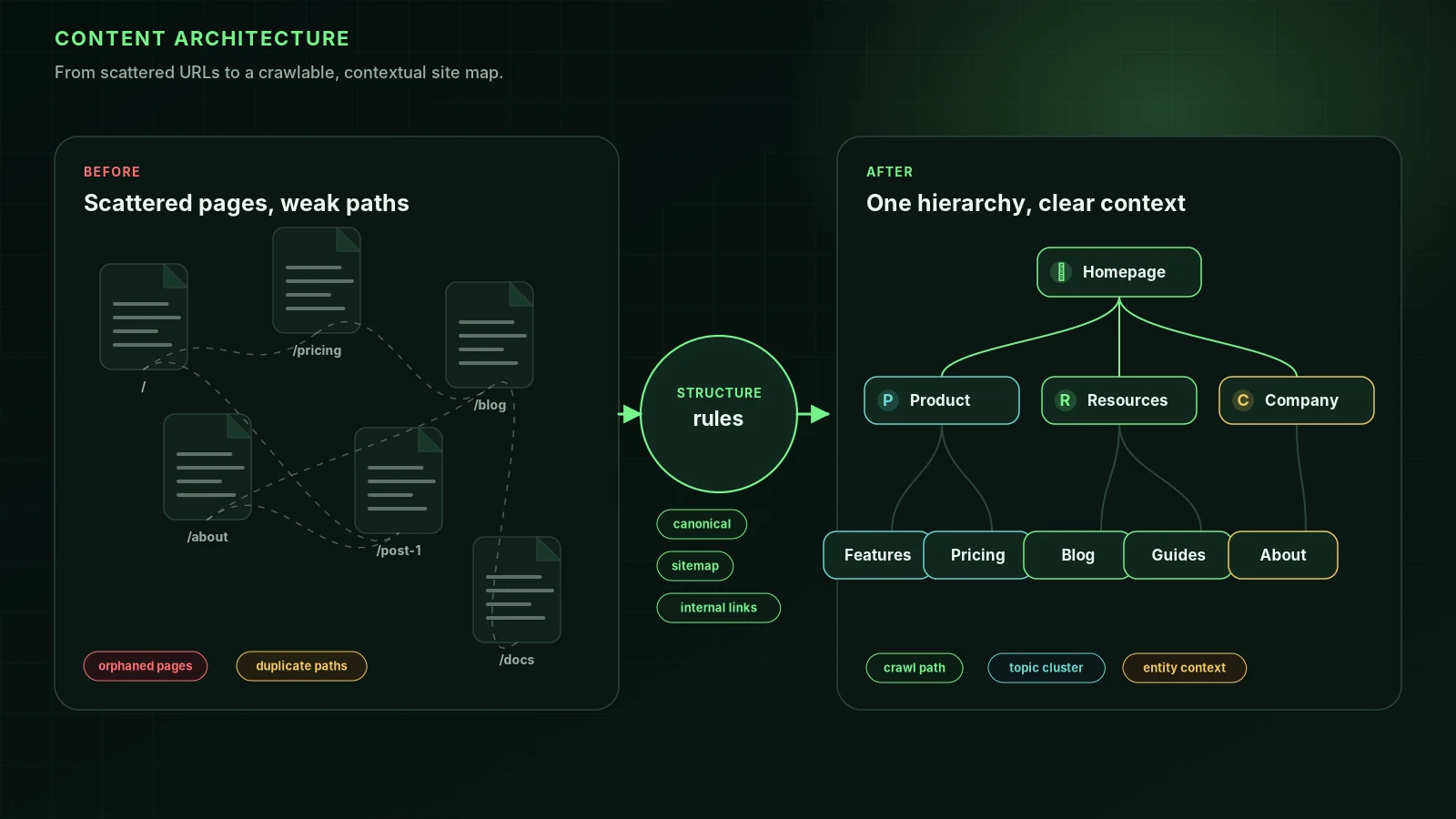
It isn't a separate world from the rest of your marketing. The best SEO uses the same research, content and pages as your ads, social posts and emails.
The main digital marketing channels
| Channel | What it does best | Cost pattern | How it connects to SEO |
|---|---|---|---|
| SEO | Captures people already searching | Upfront effort, low cost per visit later | - |
| Paid search (SEM) | Immediate visibility on chosen keywords | Pay per click, stops when budget stops | Shares keywords and landing pages |
| Social media | Creates awareness and demand | Time or ad spend per post | Spreads content that can earn links and mentions |
| Repeat visits from people who know you | Low per send | Brings people back to pages that rank | |
| Content marketing | Answers questions, builds trust | Writing time | The pages that SEO ranks |
| Video | Shows products and expertise | Production time | Videos can rank in Google and YouTube search |
| Display and social ads | Reach and retargeting | Pay per impression or click | Can drive brand searches |
Search captures demand; other channels create it
Someone searching "accountant for freelancers in Pune" already wants what an accountant sells. SEO puts you in front of them. Someone scrolling social media wasn't looking for an accountant until your post reminded them. That's why search tends to convert well but can't grow faster than the number of people searching, and why awareness channels matter: they create the searches SEO then captures, including searches for your brand name.
SEO and paid search
Paid search buys the same results page that SEO earns. Use ads to learn which keywords turn into customers, then build pages that rank for them. In Google Ads, the quality of your landing page is part of Ad Rank, so a fast, clear page helps both channels. The full comparison is in SEO vs SEM.
SEO and content marketing
Content marketing produces the pages SEO ranks. Google's guidance is to create helpful, reliable, people-first content: written for your audience, showing real expertise, and not produced mainly to attract search traffic. In practice that means one strong page per topic, kept up to date, rather than many thin ones. See SEO blogging for a process.
SEO and social media
Google's SEO Starter Guide suggests promoting your site through social media and community engagement, without overdoing it. Social posts don't directly raise your rankings, but they get your best pages in front of people who may link to them, mention you or search for you later. See social signals.
SEO and AI assistants
Many questions that used to be searches are now asked in ChatGPT, Perplexity, Claude or Google's AI Mode. These systems retrieve web pages and cite them. Pages that are crawlable, readable without JavaScript and clearly written are the ones they can use. That makes classic SEO more valuable, with one addition: AI crawlers have to be allowed in. See SEO vs AEO vs GEO and how to measure AI visibility.
A simple plan for a small team
- List the 10 to 20 searches that mean someone wants to buy from you.
- Make sure each has one strong page, then check those pages with the free SEO checker.
- Run a small paid search campaign on the most valuable few while the pages earn rankings.
- Publish one genuinely useful article a month that answers a question customers ask, and share it on your social channels and email list.
- Each month, check Search Console for queries that bring impressions but few clicks, and improve those pages.
- Measure leads and sales by channel in your analytics, not just traffic.
FAQ
What does SEO stand for in digital marketing?+
Search engine optimization: improving your website so it appears in the unpaid results on Google, Bing and other search engines for searches related to your business.
Is SEO part of digital marketing?+
Yes. Digital marketing covers every online channel, including search (SEO and paid search), social media, email, content, video and display advertising. SEO is the organic search part.
Is SEO advertising?+
Not in the usual sense. You can't pay Google for organic positions. Paying for search visibility is paid search advertising (SEM or PPC), which is a separate channel shown in labelled ad slots.
How should I split my budget between SEO and ads?+
There's no universal ratio. A practical approach: fund ads for the few high-intent keywords that bring sales now, put steady effort into SEO for the pages that will keep earning, and move budget as Search Console and ad data show what converts.
Sources
- SEO Starter Guide — Google Search Central (2025-12-10)
- Creating helpful, reliable, people-first content — Google Search Central
- About Ad Rank — Google Ads Help
Run it on your domain
See this lens as a finding, not a lecture.
Free technical GEO audit. Evidence-traced scores, LLM-ready export, no login.
Audit your website