Agencies 12 min read
How to Choose an SEO Agency, Consultant or Freelancer (Without Getting Burned)
Most bad SEO hires are avoidable. Check the provider's own site, ask the questions Google itself recommends, insist on seeing every change, and walk away from anyone who guarantees rankings.

Founder, SEO·AEO·GEO
Builds SEO·AEO·GEO and writes the crawler, schema, and citation research published here.
Key takeaways
- Google's own advice: ask for examples of past work, whether they follow Google Search Essentials, what results they expect and how they'll measure them, and whether they'll share every change they make.
- No one can guarantee a number one ranking on Google. Google says that if someone does, find someone else.
- Before the sales call, check the provider's own site: if its pages have indexing, title or crawler-access problems, expect the same on yours.
- Agency, consultant or freelancer is a question of scope: agencies cover content, links and technical work at once, consultants advise and audit, and freelancers usually do one part well.
- Get every deliverable in writing: what's done each month, who owns the content and accounts, how results are reported, and how you can leave.
To choose an SEO agency, consultant or freelancer, start with evidence rather than promises: look at their own website, ask for examples of past work, and ask exactly what they'll change on your site and how they'll measure it. Rule out anyone who guarantees rankings.
That advice isn't ours. Google publishes a page called "Do you need an SEO?" with the questions to ask and the warning signs to look for. This guide turns it into a checklist you can use on a sales call.
What SEO services include
Google lists the services an SEO may provide. A good proposal should say which of these it covers and which it doesn't:
- Review of your site's content or structure
- Technical advice on website development, such as hosting, redirects, error pages and JavaScript
- Content development
- Management of online business development campaigns
- Keyword research
- SEO training for your team
- Expertise in specific markets and geographies
- Optimizing for generative AI
If a provider can't tell you which items are in the monthly fee, you can't compare them with anyone else. For a template of what a clear scope looks like, see what goes in an SEO proposal.
Agency, consultant or freelancer?
| SEO agency | SEO consultant | Freelance SEO | |
|---|---|---|---|
| Best for | Ongoing work across technical, content and links | Audits, strategy, training, second opinions | A defined job: fixes, content, a migration |
| Who does the work | A team; ask who is actually assigned | Usually the consultant; your team implements | The freelancer |
| Typical pricing model | Monthly retainer | Project fee or day rate | Hourly, per task or small retainer |
| Main risk | Junior staff on your account; long contracts | Advice that nobody implements | Limited capacity and skills outside their specialty |
| Ask for | Named team, monthly deliverables, exit terms | A sample audit or strategy document | Examples of the same kind of job |
Marketplaces such as Fiverr and Upwork list freelancers at every level. The same checks apply: look for evidence of the specific job you need, and be wary of fixed-price packages that promise a number of backlinks.
Step 1: audit their own website first
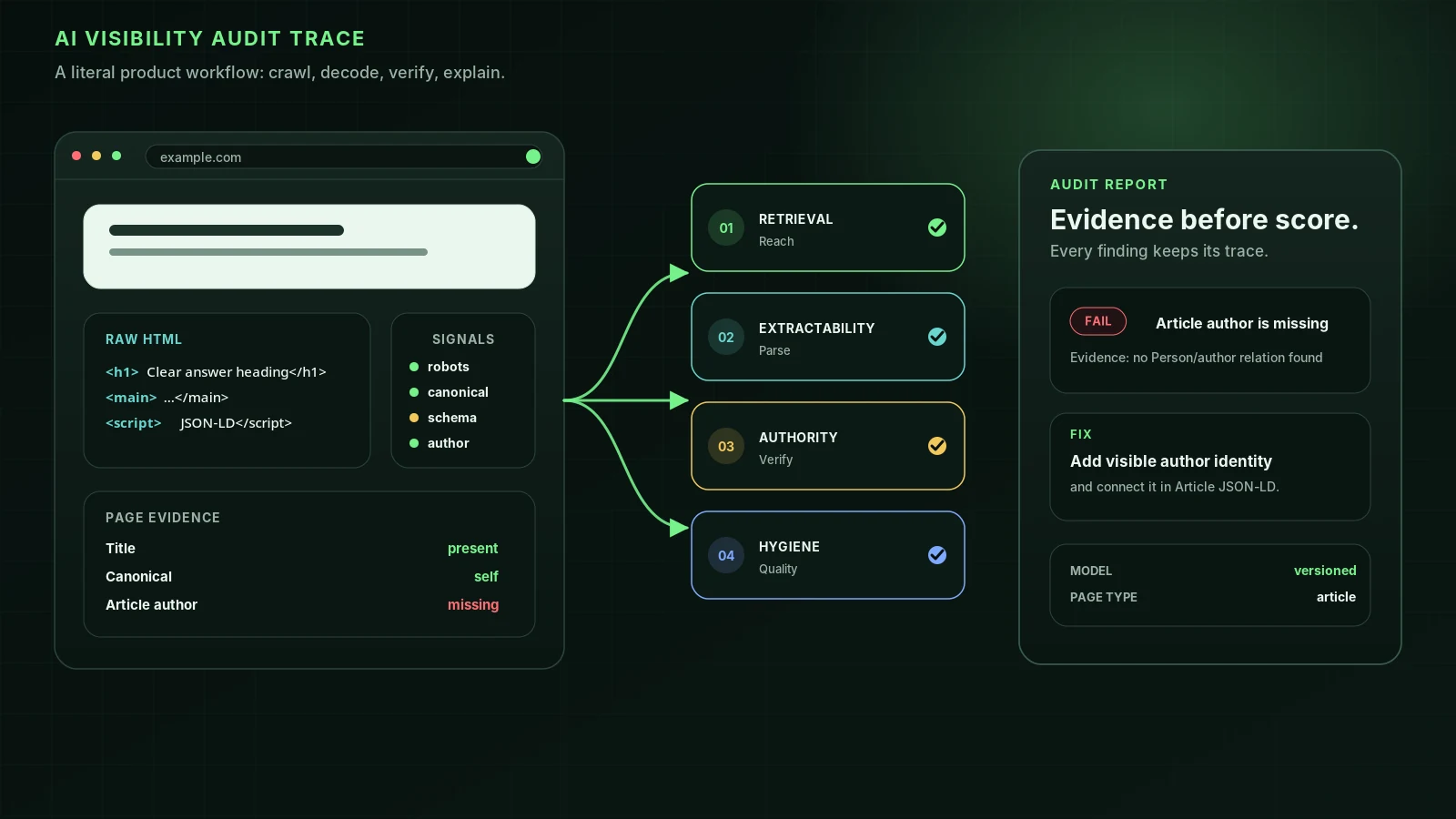
An SEO provider's own site is the one project they fully control. Before you book a call, check three or four of its pages: the homepage, a service page and a blog post. Look for the basics: is the page indexable, is the canonical correct, does each page have a unique title and description, does the content load without JavaScript, and can Google and AI search crawlers reach it?
Step 2: ask the questions Google recommends
These come straight from Google's page on hiring an SEO. Write the answers down so you can compare providers:
- Can you show me examples of your previous work and share some success stories?
- Do you follow the Google Search Essentials?
- What kind of results do you expect to see, and in what timeframe? How do you measure your success?
- What's your experience in my industry?
- What's your experience in my country or city?
- What's your experience developing international sites? (If that applies to you.)
- How long have you been in business?
- How can I expect to communicate with you? Will you share with me all the changes you make to my site?
Add three of your own: who exactly will work on my account, what happens to the content and links if we stop working together, and can I see a sample monthly report?
Step 3: watch for the red flags
| Red flag | Why it matters |
|---|---|
| "We guarantee a #1 ranking." | Google: no one can guarantee a #1 ranking on Google. If they guarantee first place, find someone else. |
| A cold email saying your site has "critical SEO errors" | Google warns to be wary of SEO firms that email you out of the blue. |
| Secret methods they won't explain | Google says to be careful if a company is secretive or won't clearly explain what it intends to do. |
| You must link to their site | Google: you should never have to link to an SEO. |
| Packages of hundreds of backlinks | Buying links or exchanging them at scale breaks Google's spam policies and can cost you rankings. |
| A tool "approved by Google" | Google warns to be wary of tools that claim to be acceptable or approved by Google Search. |
| You won't own the accounts | Your Search Console, analytics and Google Business Profile should be in your name, with the provider added as a user. |
Most of these tactics are covered in black hat vs white hat SEO, with what Google does about each.
Step 4: compare proposals on the same terms
- Scope: which of Google's listed services are included each month, and which cost extra.
- Deliverables: a number you can check, such as pages fixed, articles published or audits run, not just "ongoing optimization".
- Reporting: what's reported (Search Console clicks and impressions, indexed pages, conversions), how often, and who explains it.
- Access: you own every account and every piece of content.
- Term: the minimum contract length and how to end it.
- Price: the model (retainer, project or hourly) and what happens if scope changes. See SEO pricing.
About "best SEO companies" and "top 10 SEO agencies" lists
Lists of top SEO companies are often paid placements or written by one of the companies listed. Treat them as a starting list, not a recommendation. The four steps above will tell you more about a provider than its position on someone else's list. That's also why this guide names no agencies.
What the first 90 days should look like
- Weeks 1 to 2: access to Search Console and analytics, a technical audit, and agreed goals.
- Weeks 3 to 6: the most important technical fixes, such as indexing, canonicals, speed, crawler access and internal links.
- Weeks 6 to 12: content improvements on the pages that already get impressions, plus new pages for gaps.
- Every month: a short report showing what was done and what changed in Search Console.
If you'd rather keep SEO in-house, Google's own SEO Starter Guide and our SEO for beginners plan cover the basics. If you're an agency yourself, white-label SEO explains how to resell parts of the work.
FAQ
What does an SEO agency actually do?+
Google lists the usual services: reviewing your site's content and structure, technical advice on hosting, redirects, error pages and JavaScript, content development, managing campaigns, keyword research, SEO training, expertise in particular markets, and optimizing for generative AI.
Agency, consultant or freelancer: which should I hire?+
Hire an agency when you need several skills at once (technical, content and outreach) and the budget for a team. Hire a consultant for an audit, a strategy or a second opinion your own team will carry out. Hire a freelancer for a defined job, such as fixing technical issues or writing articles.
Is an SEO company near me better than a remote one?+
Only if local knowledge matters to your results, for example a local service business targeting one city. Google suggests asking about experience in your country or city. Otherwise judge on evidence of past work, not distance.
What are the red flags when hiring an SEO?+
Guaranteed rankings, cold emails promising page one, secrecy about methods, requiring you to link to them, selling links or private blog networks, and claims that a tool is approved by Google. Google warns about each of these.
How much do SEO services cost?+
It depends on scope and market. Most providers charge a monthly retainer, a fixed project fee or an hourly rate. See our SEO pricing guide for the models and what each should include.
How long before I should see results?+
Google says some changes take effect within hours and others take months. Ask any provider what they expect to change in the first 90 days and how they'll show you, for example indexed pages, fixed errors and Search Console impressions.
Sources
- Do you need an SEO? — Google Search Central (2026-06-05)
- Spam policies for Google web search — Google Search Central
- Google Search Essentials — Google Search Central
- SEO Starter Guide — Google Search Central (2025-12-10)
Run it on your domain
See this lens as a finding, not a lecture.
Free technical GEO audit. Evidence-traced scores, LLM-ready export, no login.
Audit your website